As we approach the end of 2025, the precious metals market is experiencing a historic turning point. Silver, which has long remained in the shadow of gold, is undergoing its own revolution. With a price now approaching $80 per ounce (approximately $78-79 at the time of writing), silver has not only broken through its historic glass ceiling, but has undergone a paradigm shift.
Here are the fundamental reasons, backed by recent events, why silver is the must-have asset for 2026.
1. The end of manipulation: The historic “short squeeze” of 2025
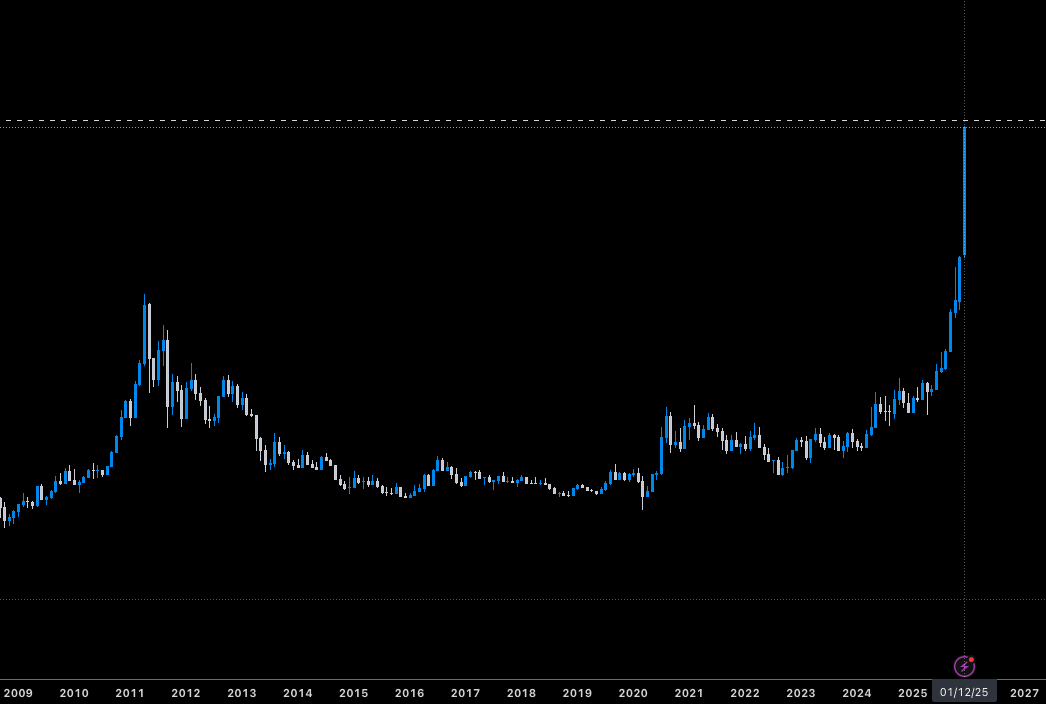
The primary driver of this rise is not only demand, but a mechanical breakdown in the market. For decades, the price of silver was held below the psychological barrier of $50 (a level briefly reached in 1980 and 2011, but never sustained).
In October 2025, this ceiling exploded. This movement was triggered by a phenomenon known as a “short squeeze” (forced liquidation of short positions). Many financial institutions, which were betting on the decline of silver via derivatives (shorting), found themselves trapped by a shortage of physical metal available in London and New York.
To cover their losses, these institutions had to buy back their positions en masse, creating a positive feedback loop that propelled the price well above $50, then $70 in December.
On October 16, 2025, the price officially closed above $53, confirming the technical breakout from the 1980 highs. Analysts note that physical shortages in London markets forced a decoupling between the “paper” price and the physical price, forcing short sellers to capitulate.
Source: Kitco and Discovery Alert market reports (October 2025) on the physical liquidity crisis in London.
2. An aggravated supply shortage: The Samsung case
This is a crucial point that few mainstream investors have noticed: industry giants are no longer content to buy silver on the open market; they are securing production at the source, thereby drying up global supply.
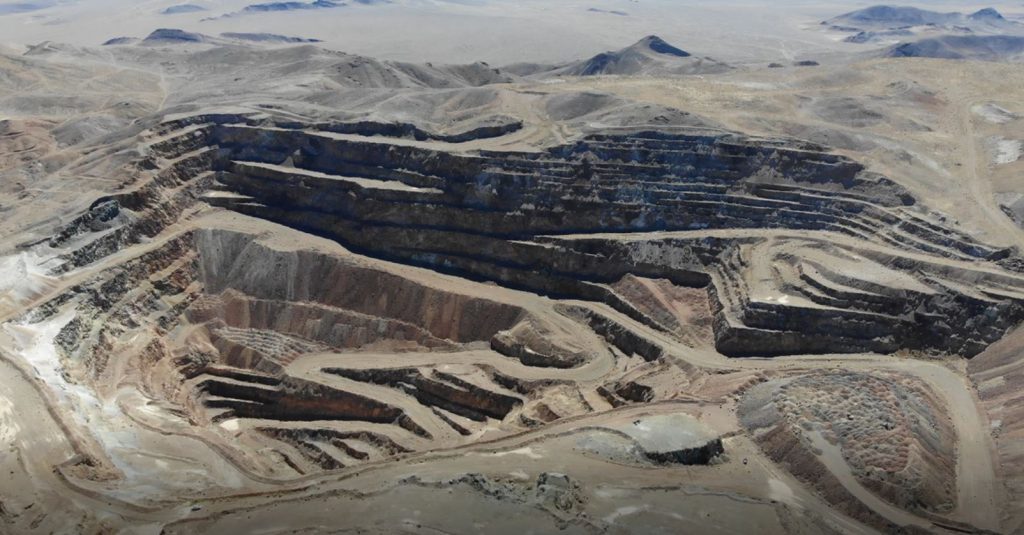
The most striking example in 2025 is the agreement reached by Samsung. The tech giant, through its trading subsidiary, signed a direct purchase agreement (“offtake agreement”) with the mining company Silver Storm Mining. Samsung prepaid to secure 100% of the silver and zinc concentrate production from the “La Parrilla” mine in Mexico for the next two years.
This means that all the silver extracted from this mine will never reach the public market: it is directly absorbed by industry before even being refined. If other manufacturers follow this model (Apple, Tesla), the supply available to individual investors will collapse.
The official agreement stipulates that Samsung C&T has acquired the rights to purchase 100% of the production from the La Parrilla mine.
This means that all the silver extracted from this mine will never reach the public market: it is directly absorbed by the industry before even being refined. If other manufacturers follow this model (Apple, Tesla), the supply available to individual investors will collapse.
The official agreement stipulates that Samsung C&T has acquired the rights to purchase 100% of the production from the La Parrilla mine in the state of Durango (Mexico) in exchange for $7 million in financing to restart operations.
Source: Official press release from Silver Storm Mining & Samsung C&T (October 2025), relayed by Nasdaq and Scottsdale Mint.
3. The industrial revolution: “Infinite” demand versus finite supply
The real driver of the rise in silver prices for 2026 is not speculation, but physics. Silver is the most electrically and thermally conductive metal on Earth. In a world that is becoming increasingly electrified and digitized, it is becoming irreplaceable.
Artificial Intelligence and Data Centers
The explosion of AI in recent years has created a massive need for new data centers. What is less well known is that these infrastructures are very hungry for silver metal.
AI chips generate a lot of heat and require perfect current transmission.
Silver is used extensively in high-performance connectors, busbars (electrical distribution bars), and lead-free solders to minimize energy losses.
With the arms race between GAFAM to build the most powerful servers, demand for silver for high-power electronics has skyrocketed. This demand is “price-insensitive”: a $500,000 server needs its silver connectors, whether the price per ounce is $30 or $100.
The automotive revolution: Samsung's “Solid-State” battery
This is the technological tipping point of 2025. The automotive sector, already a consumer of silver through conventional electric vehicles (which use twice as much silver as combustion engines for their contacts), is poised for a breakthrough.
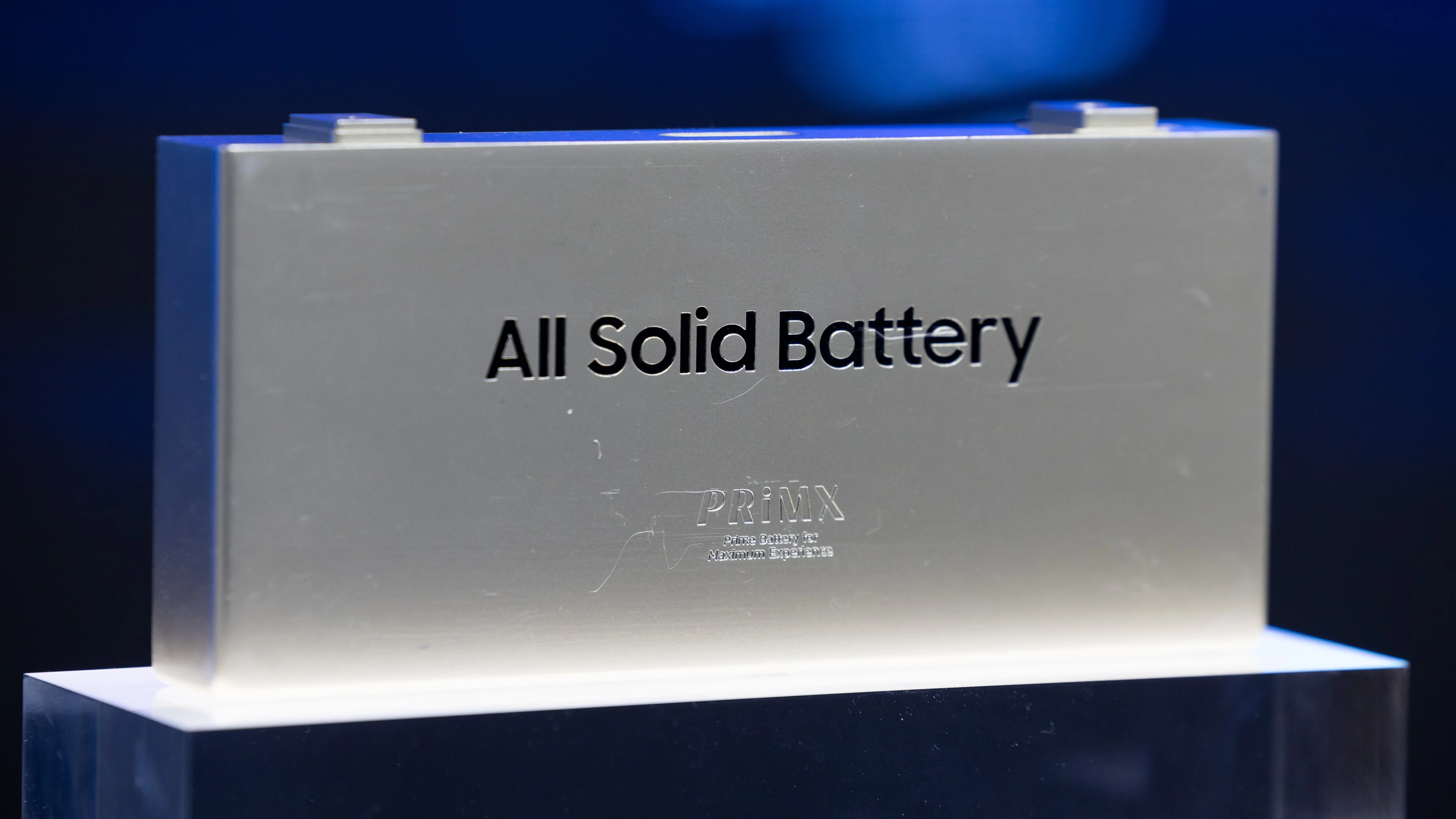
Samsung SDI has validated and launched production of its solid-state battery. Unlike conventional lithium-ion batteries, this technology incorporates a silver-carbon (Ag-C) composite layer in the anode.
- This battery offers a range of 1,000 km, recharges in 9 minutes, and lasts 20 years.
This technology requires much more silver per vehicle than current systems. If Toyota and other manufacturers follow Samsung down the “solid-state” path to remain competitive in 2026, the automotive industry could absorb a huge share of global mining production, creating an immediate deficit.
Samsung SDI's roadmaps and technical analyses confirm that the use of silver in the anode is key to solving the dendrite (short circuit) problems of solid-state batteries, making the metal indispensable to this new generation.
Solar 2.0: The silent giant
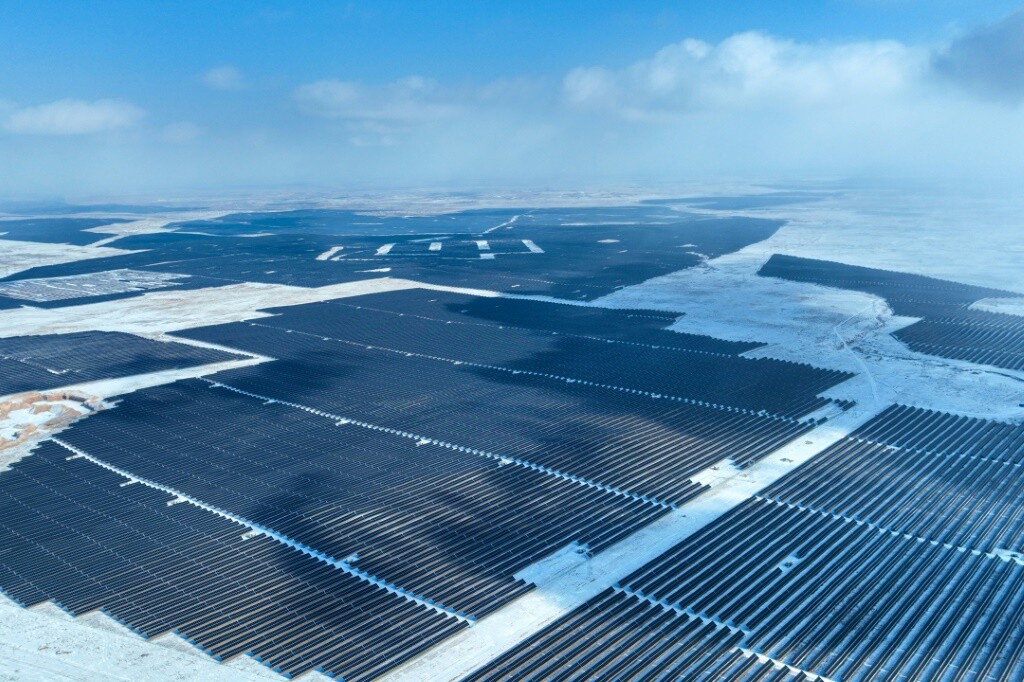
It is impossible to talk about industry without mentioning photovoltaics, which remains the largest industrial consumer of silver. But here too, technological change is exacerbating the shortage.
The solar industry is undergoing a massive shift from conventional (PERC) cells to new-generation TOPCon and HJT cells.
- The problem is that these new cells are more efficient, but they require 30% to 50% more silver per panel in the form of conductive paste.
4. The China factor: The great drain
As if industrial fundamentals weren't enough, geopolitics is dealing the final blow to available supply. The silver market is currently experiencing what experts call the “China Drain.”
China is turning off the export tap
Historically, China was a source of supply for the rest of the world. That is no longer the case. Beijing's strategy for 2025 is clear: keep strategic resources on national soil.
The Chinese government has tightened tax rules (changes to export VAT rebates on photovoltaic products and semi-processed silver). In practical terms, this means that it has become economically unattractive for Chinese refineries to sell their silver abroad.
Worse still, China has become an aggressive net importer. Stocks on the Shanghai Gold Exchange and Shanghai Futures Exchange have shown signs of capitulation: China is buying up the silver available in London and New York to feed its own industry, creating an unprecedented East-West imbalance.
Chinese customs data for 2025 shows a drastic drop in raw silver exports, while imports have surged to fill the local deficit. The “premium” on silver in Shanghai (the price difference with London) remained positive throughout the year, proving insatiable local demand that is sucking global metal toward Asia.
Source: Chinese customs reports & Bloomberg Commodities (East-West physical flow analysis).
The solar industry: Dizzying figures
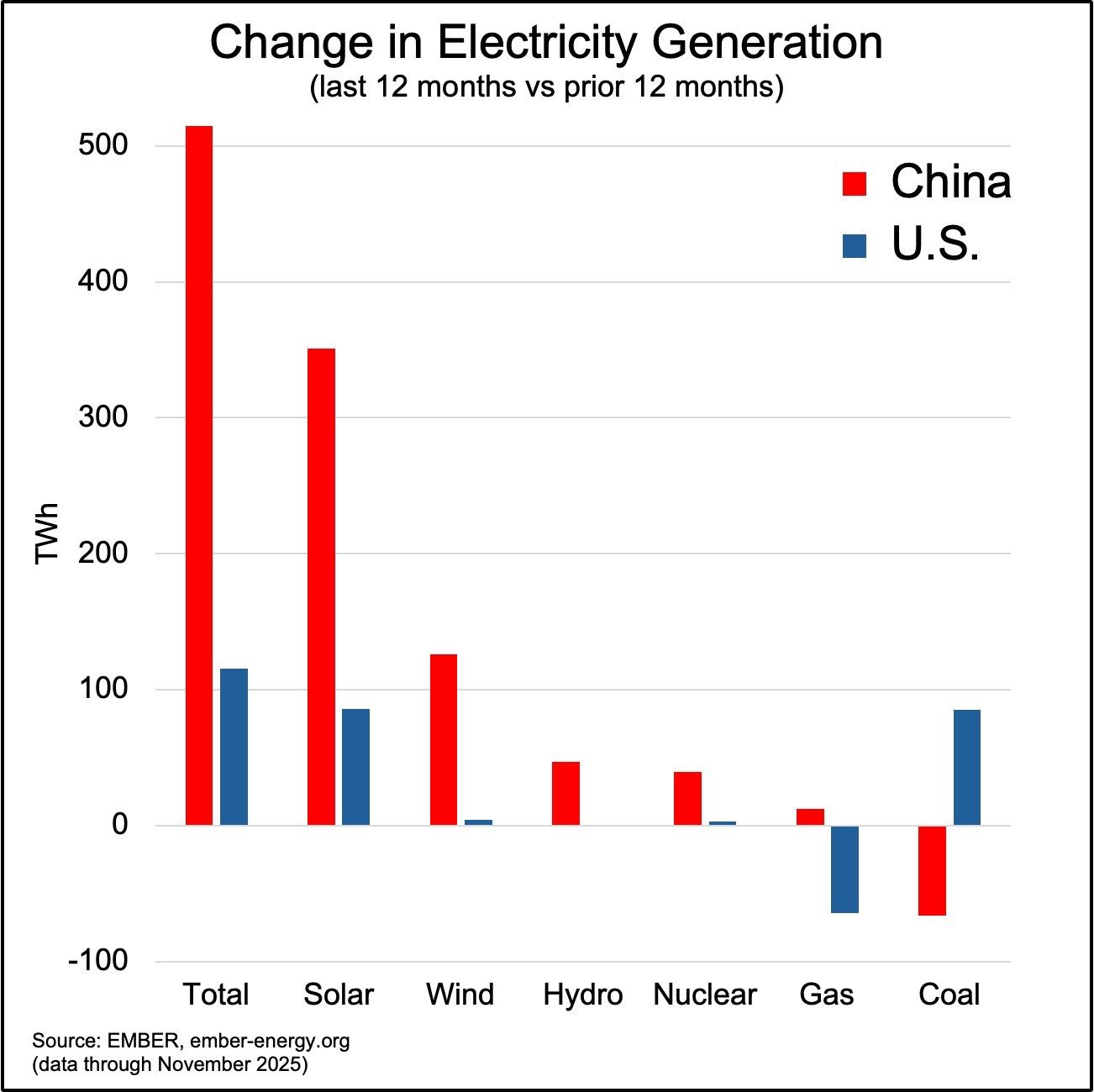
The reason for this protectionism is simple: China needs it for itself. Solar energy production in China has literally exploded, exceeding all forecasts by the International Energy Agency.
China now installs more solar panels in a year than the rest of the world combined. As mentioned above, the transition to N-Type (TOPCon) cells, which consume more silver, has become the norm in Chinese factories (JinkoSolar, Trina Solar). As long as China maintains this pace to achieve its carbon neutrality goals, it will absorb a critical share of global silver mining production.
According to the China Photovoltaic Industry Association (CPIA), installed capacity in 2024-2025 has broken new records, and silver consumption in the Chinese solar sector alone now accounts for nearly 20% of total global mining supply.
5. It's not silver that's rising, it's currency that's collapsing.
Finally, we need to change our perspective. If silver has gone from $30 to nearly $80, it's not just because demand has increased or supply has decreased, but because the value of our fiat currencies (dollar, euro) continues to erode.
Central banks are continuing their policies of “monetary easing” and rate cuts in 2025 to support public debt. By printing money, they are diluting the purchasing power of each currency. Gold and silver act as “thermometers” of this devaluation.
The gold/silver ratio, which was historically high, is beginning to narrow, with silver catching up with gold. With the dollar falling, the nominal value of silver in dollars can only increase mathematically.
The USD Index has seen its sharpest annual decline since 2017, while gold and silver are recording their best performances since 1979, confirming a flight of capital to hard assets amid a loss of confidence in sovereign debt.
Source: Forbes & Bloomberg Market Data (December 2025).
Conclusion: 2025, the year of precious metals.
Silver metal is no longer gold's “poor little brother.”
We are not facing a simple speculative bubble, but rather a structural revaluation imposed by physical reality. Central banks have flooded the world with liquidity, while physical silver reserves have dried up, siphoned off by the voracious appetite of GAFAM (AI), the Samsung battery revolution, and Chinese protectionism.
Buying physical silver today, when it is close to $80, may seem expensive compared to 2024 prices. But if we look at the fundamentals for 2026, with global technological demand exploding, this price could well be considered a “bargain” in retrospect.
The $50 barrier has fallen. The road to $100 per ounce in 2026 now seems clear. The only question that remains is not “should we buy it?”, but “will there still be any available?”
Where can you buy silver safely?
If this analysis has convinced you, I recommend the solution that I personally use:
Free storage up to €10,000: You can store your silver in their ultra-secure vaults in Switzerland without paying any storage fees (up to €10,000 worth of stock).
Total freedom: Even though your metals are stored in Switzerland, you remain 100% the owner. You can resell them in one click on the platform or, if you prefer to have them in your possession, request secure delivery to your home at any time.
To take advantage of these benefits, you can use my invitation link below:
Disclaimer
The content of this article is provided for informational and educational purposes only. It reflects solely the personal opinion of the author at the time of writing and does not constitute investment advice, a recommendation to buy, or an incentive to trade.
Financial markets, and in particular the precious metals market (silver/gold), involve risks of capital loss. Past performance is not indicative of future results. Before making any investment decision, it is recommended that you do your own research (DYOR) and consult a duly licensed professional financial advisor to ensure that the investment is appropriate for your financial situation and risk profile.