1. Hook & Project Genesis: Taming Backlog Chaos
For every modern gamer, the joy of discovery crashes against a brutal reality: the backlog explosion. Between compulsive Steam sales, Xbox Game Pass subscriptions, PlayStation Plus exclusives and accumulating Switch cartridges, managing your collection has become a cognitive nightmare. Players no longer play — they sort, they forget, and end up staring at 500 titles without knowing which one to launch.
This feeling of helplessness is exactly where Klank was born. Originally called Gaming Playlyst, the project pivoted to become the true HQ for Francophone gamers. The mission is summed up in one clear mantra: “Play more, search less.”
The architectural ambition was to build a real data vault. In an ecosystem dominated by English apps (often austere or bloated with intrusive social features), Klank was designed as a clean, fluid, fully localized interface. It’s not just a game list — it’s a space that celebrates each player’s personal story through their achievements, expectations and reviews, all in their native language.
2. Anatomy of Features: More Than Just a Tracker
Klank goes far beyond a simple wishlist. Every module was built for a precise gamer use-case.
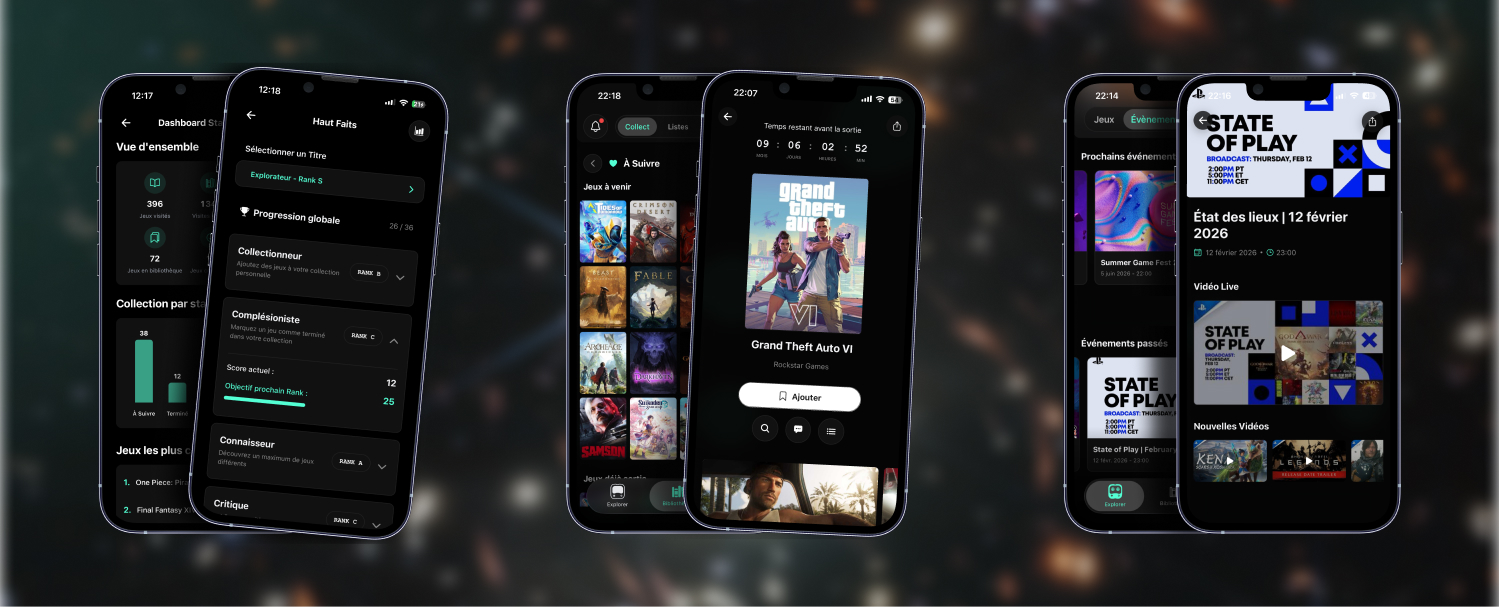
Granular Status System Organization rests on five pillars: Following (active wishlist), In Progress, To Do, Completed and On Hold. This last status was added in version 1.3 based on community feedback. Klank also tracks completion level: main quest only, side content explored, or full 100%?
Ultra-Complete Game Cards Each card aggregates massive data from IGDB and makes it digestible:
- Technical metadata: game engines (Unreal Engine, Unity, id Tech), developers, publishers
- Multimedia content: YouTube trailers + Twitch livestream integration
- Regional data: precise release dates by territory and platform
- Multiplayer info: splitscreen, online or local details
- Ecosystem: direct links to DLCs, remakes and remasters
Gamification & Titles: The Prestige Dashboard To turn data entry into a fun experience, Klank includes six title families (Explorer, Collector, Critic, etc.). Each family has seven ranks from F to S. This progression is visualized in a complete Dashboard that analyzes your activity. The more reviews you write (public or private) and the more you complete your profile, the higher your rank climbs — letting you proudly display your titles on public contributions.
3. Reflection: “Vibe Coding” or the Art of Framed Delegation
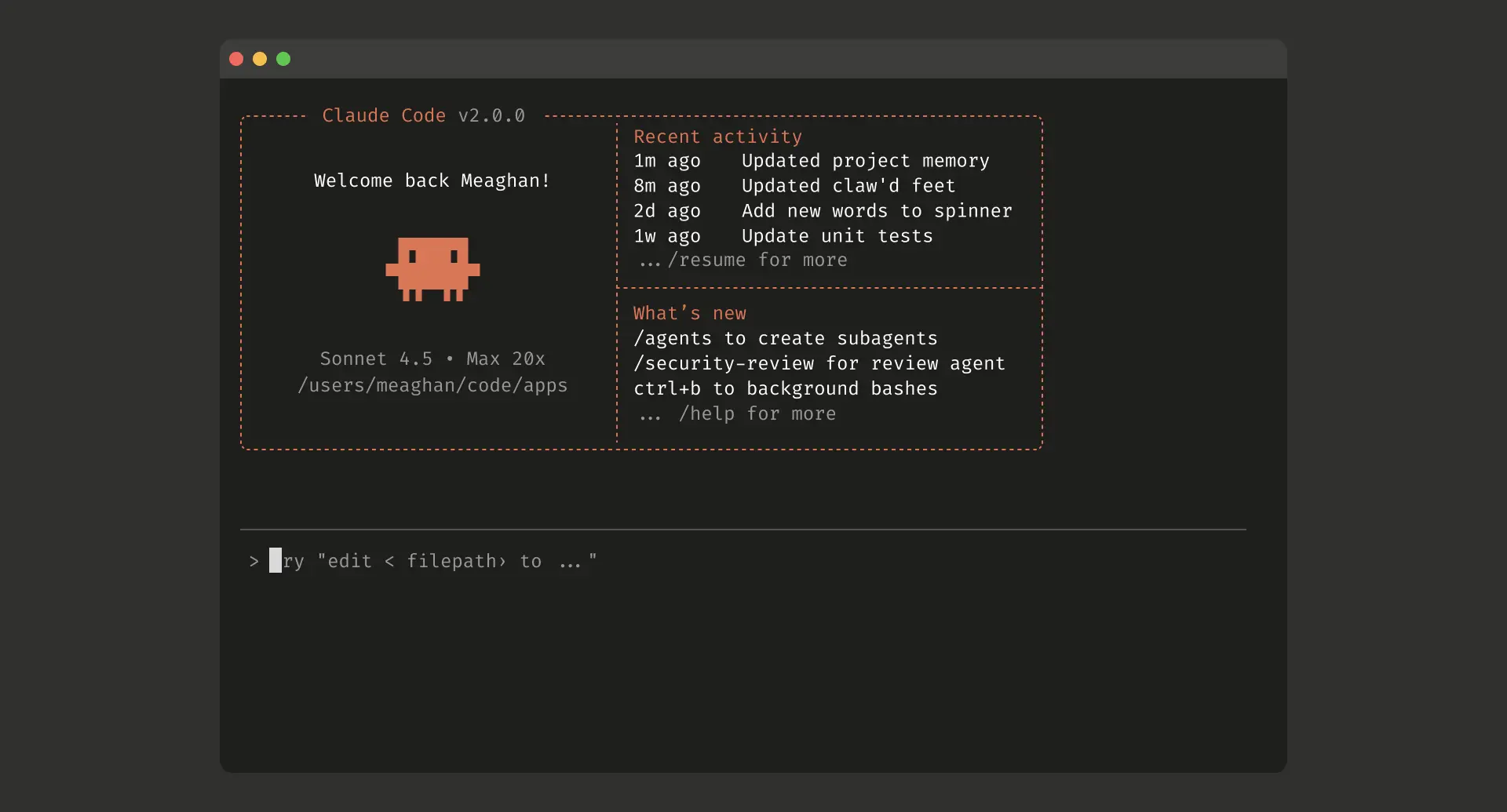
Klank was built using generative AI (mainly Claude Code), a practice I call “Vibe Coding.” But the name is misleading — it suggests a lack of structure.
“The AI isn’t an architect, it’s an ultra-fast worker. Without a precise plan, it builds walls where you need windows.”
For Vibe Coding to work, you need even more rigor:
- Exhaustive Figma mockups (every UI state: loading, error, success)
- Detailed functional specifications (e.g. exactly how the S rank is calculated)
- Technical context (clear database structure and code conventions given to the AI)
This “framed delegation” lets a solo developer multiply productivity by ten… as long as you remain the guardian of architectural coherence.
4. Architectural Deep Dive: The Modern “Full-SaaS” Stack
As a solo developer, stack choice isn’t about hype — it’s about speed to market and maintainability. For Klank, the goal was to eliminate all infrastructure friction and focus purely on business logic.
Frontend (React Native + Expo SDK 52)
- Expo Router: file-based navigation (Next.js style) for atomic and predictable routing
- NativeWind (Tailwind for React Native): 40% productivity gain on complex UIs
State & Cache Management
- Zustand for global client state (UI preferences, filters, forms)
- React Query (TanStack Query) for server cache: stale-while-revalidate pattern with IGDB delivers true “zero-latency” feel
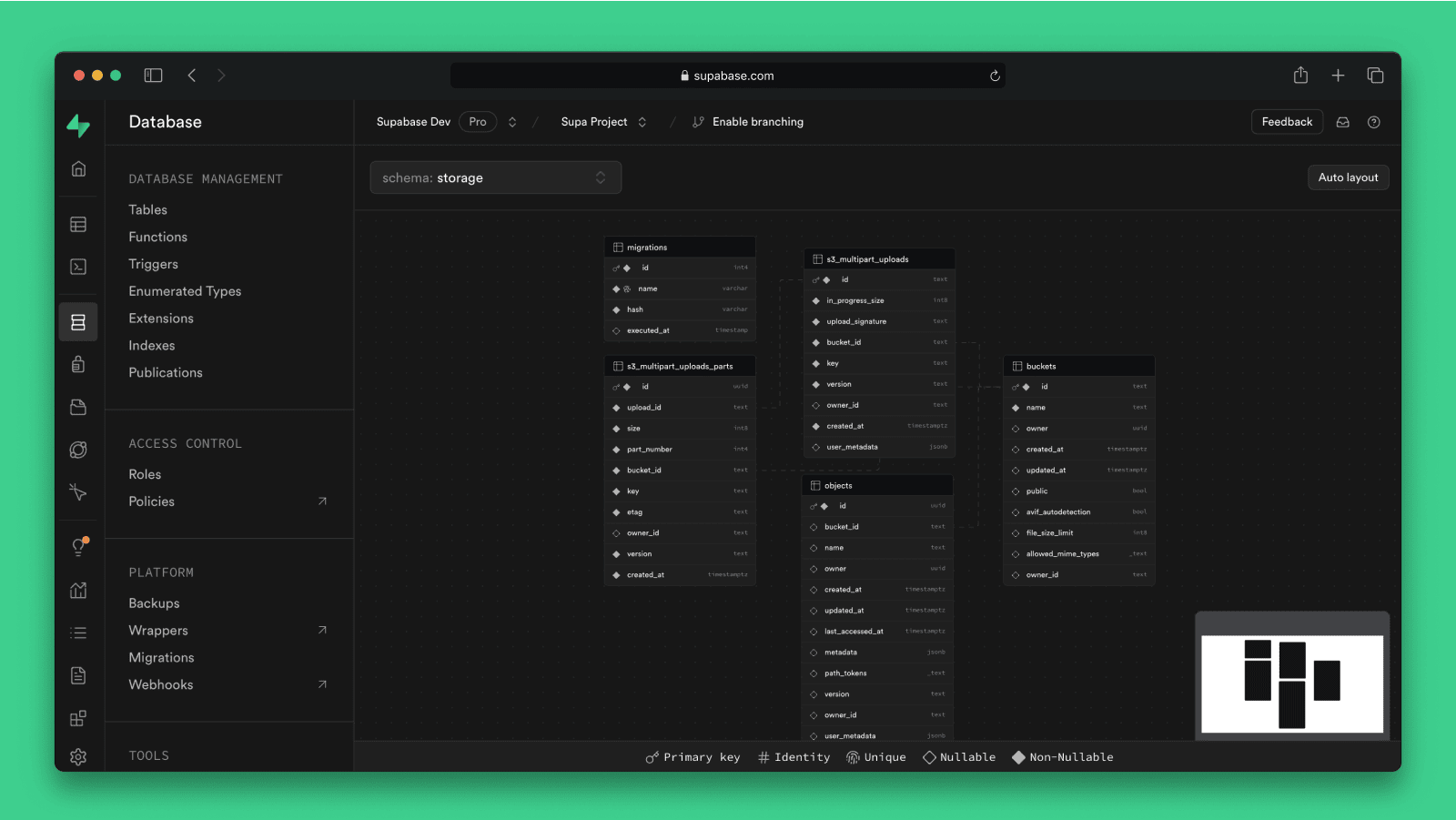
“Batteries-Included” Backend (Supabase) PostgreSQL + Row Level Security (RLS) for database-level security, Edge Functions (Deno) for heavy tasks (Steam sync, push notifications).
Monetization & Analytics RevenueCat for granular subscriptions, AdMob for the free tier (light implementation that never hurts UX).
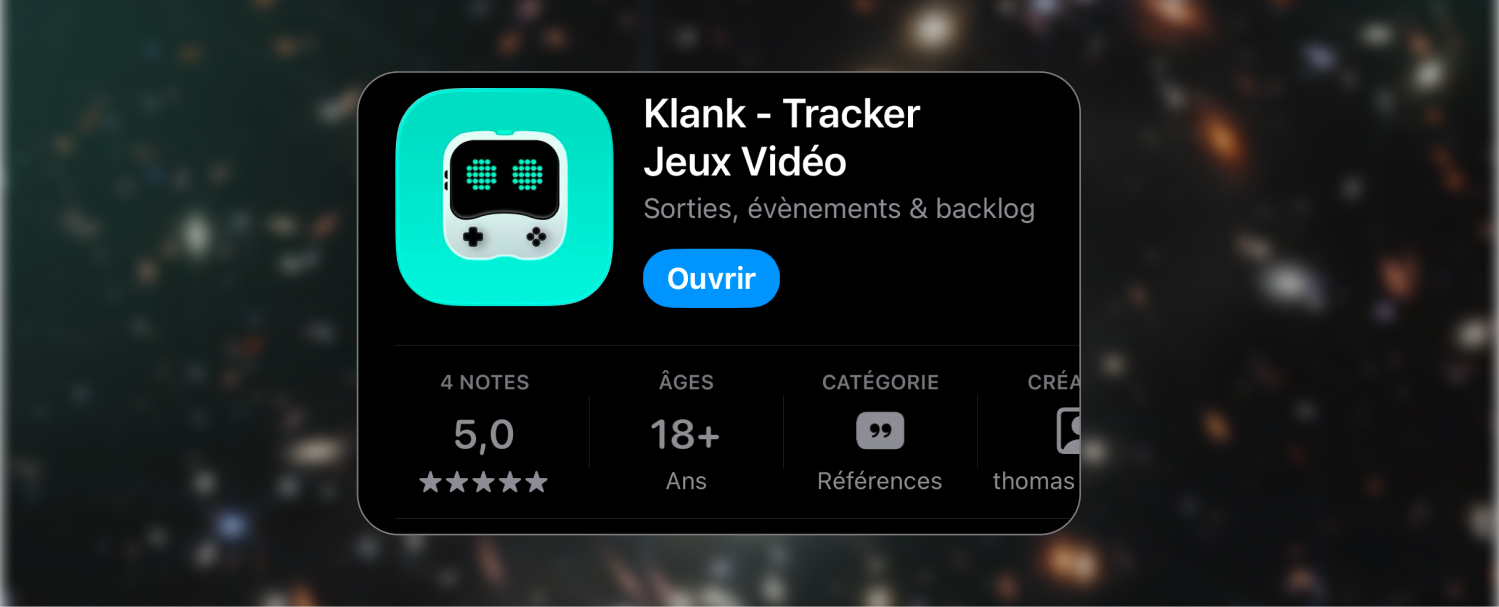
5. The Trial by Fire: App Store Deployment & Validation
Moving from web to a published mobile app on the App Store is a brutal transition.
- Learning Xcode, entitlements, certificates and provisioning profiles… TestFlight was my best friend.
- Apple validation: four review rounds. Examiners were very strict on Data Privacy (full Nutritional Label: email, user ID, device ID for AdMob).
- Version 1.3 (released March 3): complete status management overhaul, drastically simplified sharing, and optimized review suggestions.
6. Technical Roadmap & Transformative Conclusion
Klank’s future is already mapped:
- Advanced community features (collaborative lists)
- New AI-powered features to enhance user experience even further
Klank proves that in 2026 the technical barriers for building complex software have melted away. But this new accessibility shifts the value cursor: code becomes a commodity, while vision and architecture return as the true pillars of engineering.
In a world where AI can generate thousands of lines of code in seconds, the real question for every software engineer is no longer “how do I code?” but “what experience do I want to deliver?”
For Klank, the answer was simple: become the conductor of a 100% passion-driven gaming experience.
Klank is available for free on the App Store → Direct link
Showcase site + French game search engine (300k titles): klank.akisama.fr